
An Overview of Various Versions of USB
USB Type-C is currently a widely adopted interface for both computers and mobile phones. As a transmission standard, USB interfaces have long been the primary method for data transfer when using personal computers. From portable USB flash drives to high-capacity external hard drives, all rely on this standardized transmission method. The unified interface and transmission protocol, apart from the Internet, are the main ways for people to exchange data and information. It can be said that the USB interface is one of the cornerstones that have made personal computers bring about an efficient life today. From the initial USB Type A to today’s USB Type C, the transmission standards have undergone generations of changes. Even among Type C interfaces, there are significant differences. The historical versions of USB are summarized as follows:
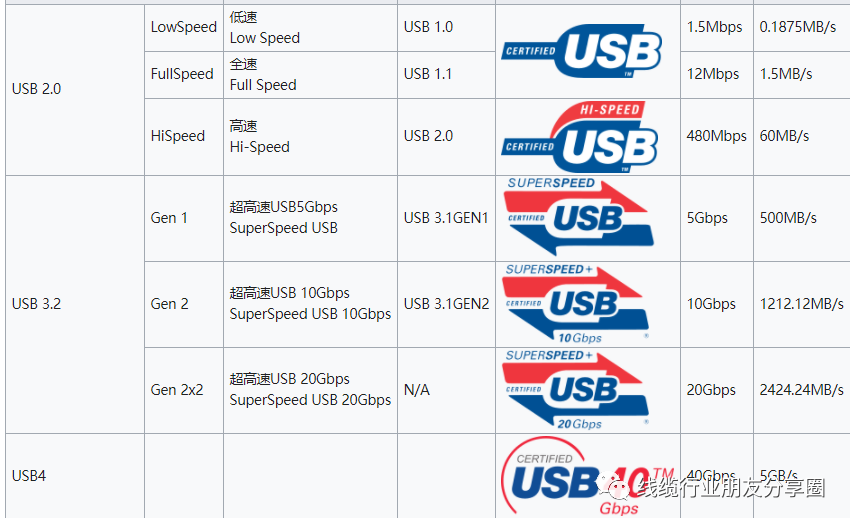
Overview of the Naming Changes and Development of the USB Logo
The USB logo that everyone is familiar with (as shown in the following figure) was inspired by the trident, a powerful three-pronged spear, which is the weapon of Neptune, the Roman god of the sea (also the name of Neptune in astronomy). However, to avoid the design of the spear shape suggesting that people insert their USB storage devices everywhere, the designer modified the three prongs of the trident, changing the left and right prongs from triangles to a circle and a square respectively. These three different shapes imply that various external devices can be connected using the USB standard. Now this logo can be seen on the connectors of various USB cables and device sockets. Currently, USB-IF has no certification requirements or trademark protection for this logo, but there are requirements for different types of USB products. The following are the logos of different USB standards for your reference.
USB 1.0 -> USB 2.0 Low-Speed
USB 1.1 -> USB 2.0 Fow-Speed
USB 2.0 -> USB 2.0 How-Speed
USB 3.0 -> USB 3.1 Gen1 -> USB 3.2 Gen1
USB 3.1 -> USB 3.1 Gen2 -> USB 3.2 Gen2 x 1
USB 3.2 -> USB 3.2 Gen2 x 2 USB 4 -> USB 4 Gen3 x 2
Base Speed USB logo

Only for use in the packaging, promotional materials, advertisements, product manuals, etc. of products that support Basic-Speed (12Mbps or 1.5Mbps), which corresponds to the USB 1.1 version.
2. Base Speed USB OTG Identifier

Only for use in the packaging, promotional materials, advertisements, product manuals, etc. of OTG products that support Basic-Speed (12Mbps or 1.5Mbps), which corresponds to the USB 1.1 version.
3. Hi Speed USB Mark

Only for use in the packaging, promotional materials, advertisements, product manuals, etc. of products corresponding to Hi-Speed (480Mbps) – the USB 2.0 version.
4. Hi-Speed USB OTG logo

Only for use in the packaging, promotional materials, advertisements, product manuals, etc. of OTG products corresponding to Hi-Speed (480Mbps) – also known as USB 2.0 version.
5. SuperSpeed USB logo
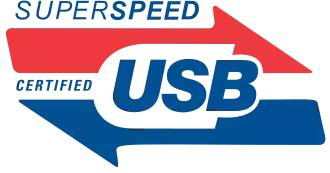
Only for use in the packaging, promotional materials, advertisements, product manuals, etc. of products that support Super Speed (5Gbps), which corresponds to the USB 3.1 Gen1 (original USB 3.0) version.
6. SuperSpeed USB Trident Logo

This is only for supporting the Super Speed (5Gbps) version, which corresponds to USB 3.1 Gen1 (original USB 3.0), and the USB cables and devices (next to the USB interface that supports Super Speed). It cannot be used for product packaging, promotional materials, advertisements, product manuals, etc.
7. SuperSpeed 10Gbps USB Identifier
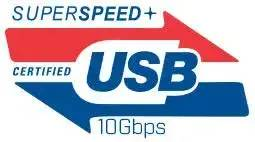
Only for use in the packaging, promotional materials, advertisements, product manuals, etc. of products corresponding to the Super Speed 10Gbps (i.e. USB 3.1 Gen2) version.
8. SuperSpeed 10Gbps USB Trident Logo
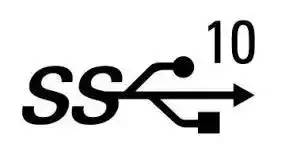
Only for use with USB cables corresponding to the Super Speed 10Gbps (i.e. USB 3.1 Gen2) version, and on the devices (next to the USB interface that supports Super Speed 10Gbps), cannot be used for product packaging, promotional materials, advertisements, product manuals, etc.
9. USB PD Trident Logo
Only applicable for supporting Basic-Speed or Hi Speed (i.e. USB 2.0 or lower versions), and also supporting USB PD fast charging.
10.SuperSpeed USB PD Trident Logo
This product is only suitable for supporting Super Speed 5Gbps (i.e. USB 3.1 Gen1 version), and also supports USB PD fast charging.
11. SuperSpeed 10Gbps USB PD Trident Mark
This product is only for supporting the Super Speed 10Gbps (i.e. USB 3.1 Gen2) version, and also supports USB PD fast charging.
12. Latest USB logo announcement: Based on transmission speed, there are four levels: 5/10/20/40 Gbps.
13. USB Charger Identification
Post time: Aug-11-2025


