
Introduction to DisplayPort, HDMI and Type-C Interfaces
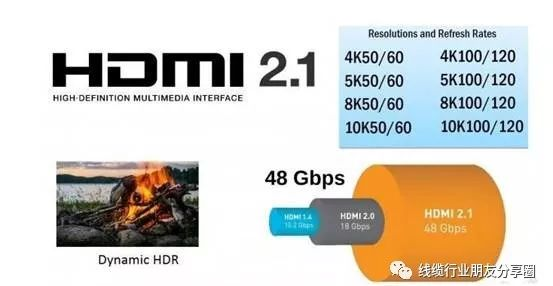
On November 29, 2017, HDMI Forum, Inc. announced the release of HDMI 2.1, 48Gbps HDMI, and 8K HDMI specifications, making them available to all HDMI 2.0 adopters. The new standard supports 10K resolution @ 120Hz (10K HDMI, 144Hz HDMI), with the bandwidth increased to 48Gbps, and introduces dynamic HDR and variable refresh rate (VRR) technologies.
On July 26, 2017, the USB 3.0 Promoter Group alliance, consisting of technology companies such as Apple, HP, Intel, and Microsoft, announced the USB 3.2 standard (USB 3.1 C TO C, USB C 10Gbps, Type C Male TO Male), which supports dual-channel 20Gbps transmission and recommends Type-C as the unified interface.
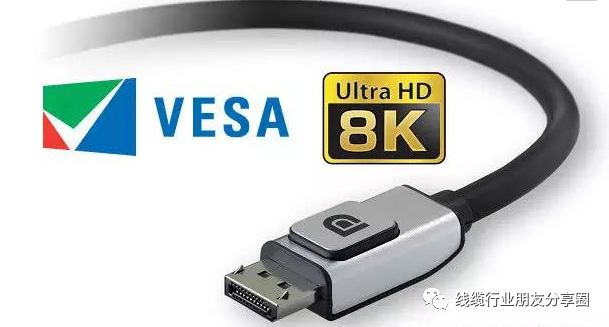
On March 3, 2016, VESA (Video Electronics Standards Association) officially released the new version of the audio-visual transmission standard, DisplayPort 1.4. This version supports 8K@60Hz and 4K@120Hz, and for the first time integrates the display stream compression technology (DSC 1.2).
2018
Expected official release of updated standards
DisplayPort 1.4 standard officially released! Supports 60Hz 8K video
On March 1st, VESA (Video Electronics Standards Association) officially announced the new version of the audio-visual transmission standard DisplayPort 1.4. The new standard further optimizes the ability to transmit video and data through Type-C (USB C 10Gbps, 5A 100W USB C Cable), while supporting HDR metadata transmission and extended audio specifications. The new standard is regarded as the first major update after the release of DisplayPort 1.3 in September 2014.
At the same time, this is also the first DP standard that supports DSC 1.2 (Display Stream Compression) technology. In the DSC 1.2 version, 3:1 lossless video stream compression can be allowed.
The “Alternate Mode (Alt Mode)” provided by the DP 1.3 standard already supports the simultaneous transmission of video and data streams via USB Type-C and Thunderbolt interfaces. While DP 1.4 takes it a step further, allowing for the simultaneous transmission of high-definition video while SuperUSB (USB 3.0) is used for data transmission.
In addition, DP 1.4 will support 60Hz 8K resolution (7680 x 4320) HDR video as well as 120Hz 4K HDR video.
Other updates of DP 1.4 are as follows:
1. Forward Error Correction (FEC): A part of the DSC 1.2 technology, it addresses the appropriate fault tolerance when compressing video for output to external displays.
2. HDR Metadata Transmission: By using the “secondary data packet” in the DP standard, it provides support for the current CTA 861.3 standard, which is very useful for the DP-HDMI 2.0a conversion protocol. Additionally, it offers more flexible metadata packet transmission, supporting future dynamic HDR.
3. Expanded Audio Transmission: This specification can cover aspects such as 32-bit audio channels, 1536kHz sampling rate, and all known audio formats at present.
VESA states that DP 1.4 will become the most ideal interface standard to meet the high-quality audio and video transmission requirements of high-end electronic devices.
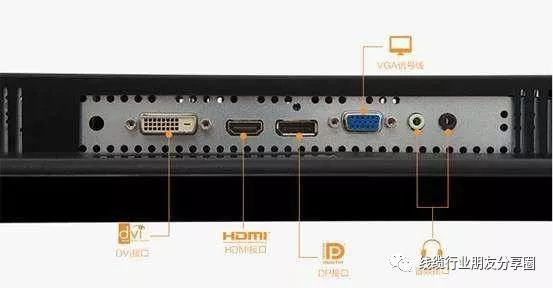
The purpose of the birth of Displayport was quite clear – to eliminate HDMI. Therefore, compared to HDMI, it has no interface certification or copyright fees, and has gathered a large number of major companies in the display industry to form the VISA association to compete against the HDMI association. The list includes many high-end chip manufacturers and electronic equipment manufacturers, such as Intel, NVIDIA, AMD, Apple, Lenovo, HP, and so on. Thus, it can be seen how fierce the momentum of Displayport is. The final outcome of the game is known to all! For the Displayport interface, due to the preemptive move of the HDMI interface, the popularization effect of the Displayport interface in many fields has not been ideal. However, the continuous progress spirit of the Displayport interface also reminds HDMI to keep developing. The game between the two will continue in the future.
On November 28th, the official of HDMI Forum announced the official launch of the latest HDMI 2.1 technical standard.
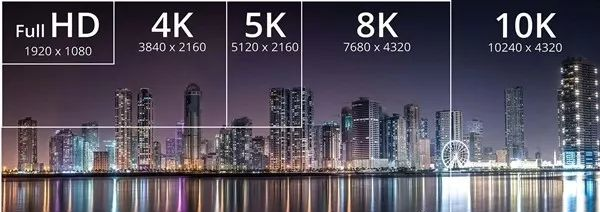
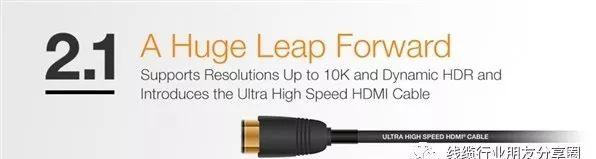
Compared with before, the most significant change is the dramatic increase in bandwidth, which can now support 10K videos at the highest level. The current bandwidth of HDMI 2.0b is 18 Gbps, while HDMI 2.1 will increase to 48 Gbps, which can fully support lossless videos with resolutions and refresh rates such as 4K/120Hz, 8K/60Hz, and 10K, and also support dynamic HDR. For this reason, the new standard has adopted a new ultra-high-speed data cable (Ultra High Speed HDMI Cable).
Post time: Jul-28-2025


