
Introduction to Specification Changes from HDMI 1.0 to HDMI 2.1 (Part 2)
HDMI 1.2a
Compatible with CEC multi-device control
HDMI 1.2a was released on December 14, 2005, and fully specified the Consumer Electronic Control (CEC) features, command set, and CEC compliance testing.
A minor revision of HDMI 1.2 was launched in the same month, supporting all CEC (Consumer Electronic Control) functions, allowing compatible devices to be controlled entirely with a single remote control when connected via HDMI.
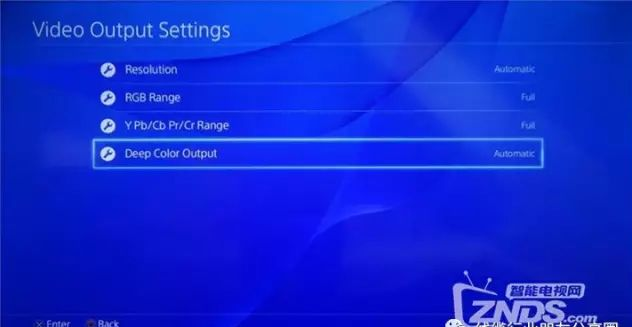
The latest generation of televisions, Blu-ray players and other equipment all support the Deep Color technology, enabling the display of more vivid colors.
HDMI Type-A, which is the most common type of HDMI connector, has been used since version 1.0 and is still in use today. Type C (mini HDMI) was introduced in version 1.3, while Type D (micro HDMI) was launched in version 1.4.
HDMI 1.3
The bandwidth has been increased to 10.2 Gbps, supporting Deep Color and high-definition audio streaming
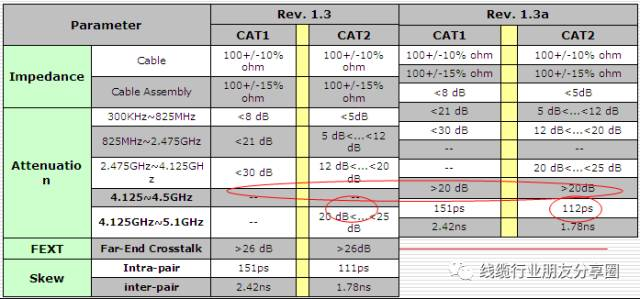
A major revision launched in June 2006 increased the bandwidth to 10.2 Gbps, enabling support for 30bit, 36bit and 48bit xvYCC, sRGB or YCbCr Deep Color technologies. Additionally, it supported Dolby TrueHD and DTS-HD MA high-definition audio streaming, which could be transmitted from a Blu-ray player via HDMI to a compatible amplifier for decoding. The subsequent HDMI 1.3a, 1.3b, 1.3b1 and 1.3c were minor modifications.
HDMI 1.4
Supported 4K/30p, 3D and ARC,
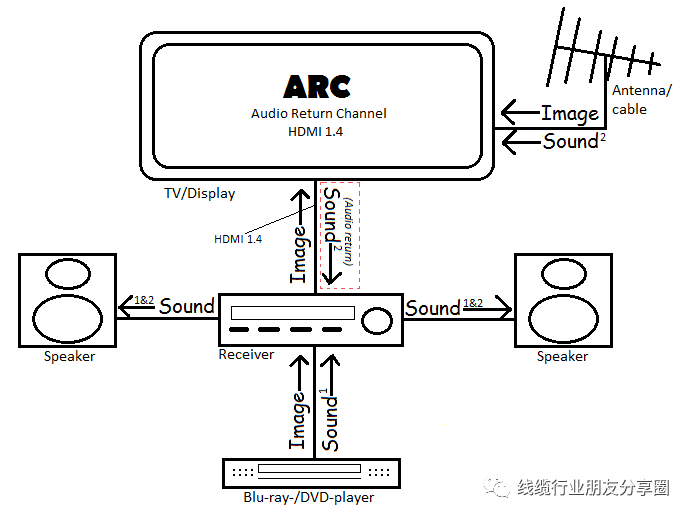
HDMI 1.4 can be regarded as one of the most popular versions a few years ago. It was launched in May 2009 and already supported 4K resolution, but only at 4,096 × 2,160/24p or 3,840 × 2,160/24p/25p/30p. That year was also the beginning of the 3D craze, and HDMI 1.4 supported 1080/24p, 720/50p/60p 3D images. Audio-wise, it added a very practical ARC (Audio Return Channel) function, allowing TV audio to be returned via HDMI to the amplifier for output. It also added a 100Mbps network transmission function, enabling sharing of internet connections via HDMI.
HDMI 1.4a, 1.4b
Minor revisions introducing 3D functionality
The 3D craze sparked by “Avatar” has continued unabated. Therefore, in March 2010 and October 2011, minor revisions HDMI 1.4a and 1.4b were released respectively. These revisions were mainly aimed at 3D, such as adding two more 3D formats for broadcasting and supporting 3D images at 1080/120p resolution.
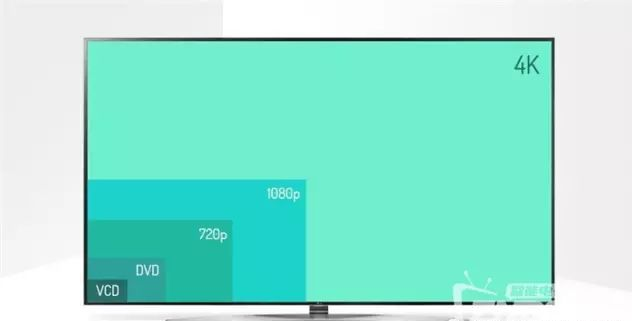
Starting from HDMI 2.0, video resolution supports up to 4K/60p, which is also the commonly used HDMI version in many current televisions, amplifiers, and other equipment.
HDMI 2.0
True 4K version, bandwidth increased to 18 Gbps
HDMI 2.0, launched in September 2013, is also known as “HDMI UHD”. Although HDMI 1.4 already supports 4K video, it only supports a lower specification of 30p. HDMI 2.0 increases the bandwidth from 10.2 Gbps to 18 Gbps, capable of supporting 4K/60p video and compatible with Rec.2020 color depth. Currently, a majority of equipment, including televisions, amplifiers, Blu-ray players, etc., adopt this HDMI version.
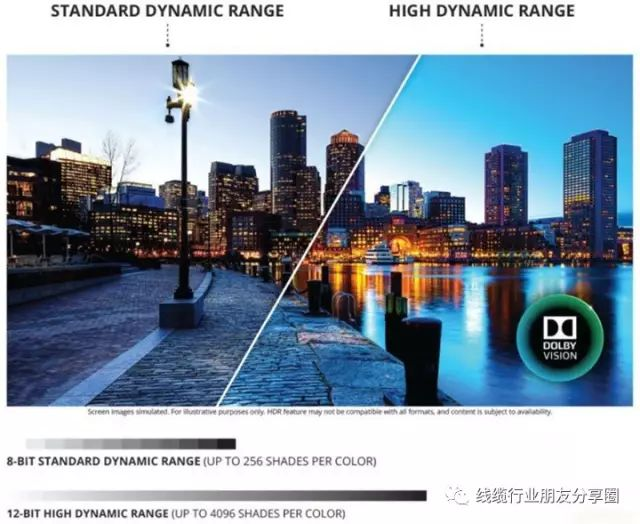
HDMI 2.0a
Supports HDR
The minor revision of HDMI 2.0, launched in April 2015, added HDR support. Currently, most of the new-generation TVs that support HDR adopt this version. New power amplifiers, UHD Blu-ray players, etc. will also have HDMI 2.0a connectors. The subsequent HDMI 2.0b is an updated version of the original HDR10 specification, which adds Hybrid Log-Gamma, a broadcast HDR format.
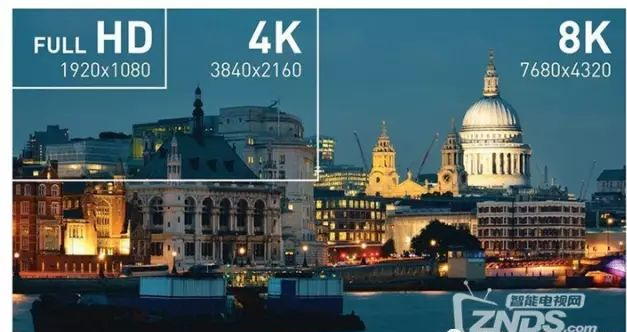
The HDMI 2.1 standard supports video with an 8K resolution.
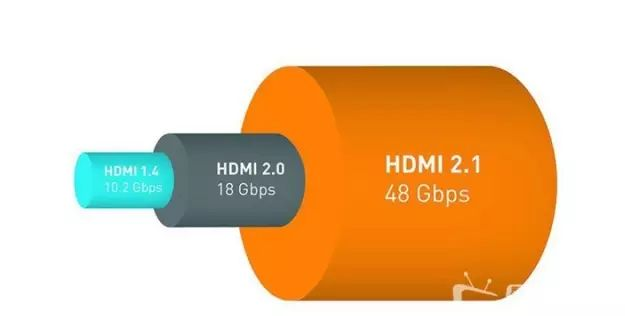
HDMI 2.1 has significantly increased the bandwidth to 48Gbps.
HDMI 2.1
It supports 8K/60Hz, 4K/120Hz video, and Dynamic HDR (Dynamic HDR).
The latest HDMI version launched in January 2017, with a bandwidth significantly increased to 48Gbps, can support up to 7,680 × 4,320/60Hz (8K/60p) images, or higher frame rate images of 4K/120Hz. HDMI 2.1 will continue to correspond to the original HDMI A, C, and D and other plug designs. Moreover, it supports the new Dynamic HDR technology, which can further enhance the contrast and color gradation performance based on the light-dark distribution of each frame compared to the current “static” HDR. In terms of sound, HDMI 2.1 supports the new eARC technology, which can transmit Dolby Atmos and other Object-based audio back to the device.
In addition, with the diversification of device forms, various types of HDMI cables with interfaces have emerged, such as Slim HDMI, OD 3.0mm HDMI, Mini HDMI (C-type), Micro HDMI (D-type), as well as Right Angle HDMI, 90-degree elbow cables, Flexible HDMI, etc., suitable for different scenarios. There are also 144Hz HDMI for high refresh rate, 48Gbps HDMI for high bandwidth, and HDMI Alternate Mode for USB Type-C for mobile devices, allowing USB-C interfaces to directly output HDMI signals without the need for converters.
In terms of materials and structure, there are also HDMI cables with metal case designs, such as Slim HDMI 8K HDMI metal case, 8K HDMI metal case, etc., which enhance the durability and anti-interference ability of the cables. At the same time, Spring HDMI and Flexible HDMI Cable also provide more options for different usage scenarios.
In conclusion, the HDMI standard is constantly evolving, continuously improving bandwidth, resolution, color, and audio performance, while the types and materials of cables are becoming increasingly diverse to meet consumers’ demands for high-quality images, high-quality sound, and convenient connections.
Post time: Sep-01-2025


