
USB 4 Introduction
USB4 is the USB system specified in the USB4 specification. The USB Developers Forum released its version 1.0 on August 29, 2019. The full name of USB4 is Universal Serial Bus Generation 4. It is based on the data transmission technology “Thunderbolt 3″ jointly developed by Intel and Apple. The data transmission speed of USB4 can reach up to 40 Gbps, which is twice the speed of the latest released USB 3.2 (Gen2×2).
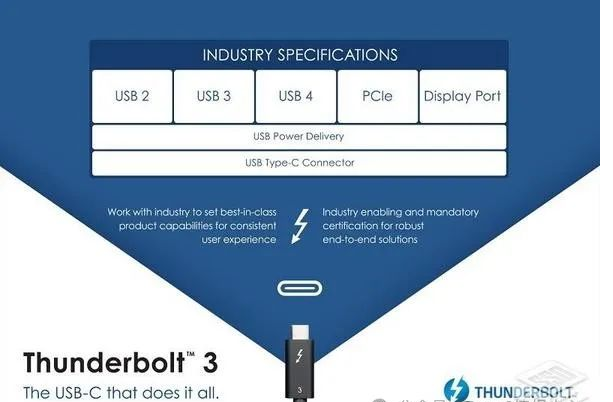
Unlike previous USB protocol standards, USB4 requires a USB-C connector and needs the support of USB PD for power supply. Compared with USB 3.2, it allows the creation of DisplayPort and PCI Express tunnels. This architecture defines a method for dynamically sharing a single high-speed link with multiple terminal device types, which can best handle data transmission by type and application. USB4 products must support a throughput of 20 Gbit/s and can support a throughput of 40 Gbit/s. However, due to tunnel transmission, when transmitting mixed data, even if data is transmitted at a rate of 20 Gbit/s, the actual data transmission rate may be higher than that of USB 3.2 (USB 3.1 Gen 2).
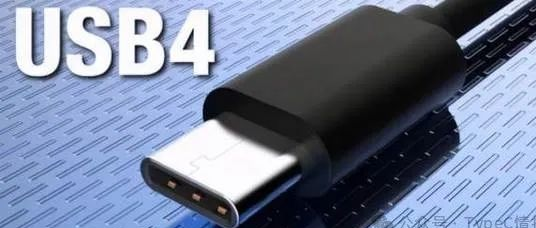
USB4 is divided into two versions: 20Gbps and 40Gbps. The devices with USB4 interface available on the market may offer either the 40Gbps speed of Thunderbolt 3 or a reduced version of 20Gbps. If you want to purchase a device with the highest transmission speed, that is, 40Gbps, it is best to check the specifications before making the purchase. For scenarios requiring high-speed transmission, choosing the appropriate USB 3.1 C TO C is crucial as it is the key carrier for achieving a 40Gbps rate.
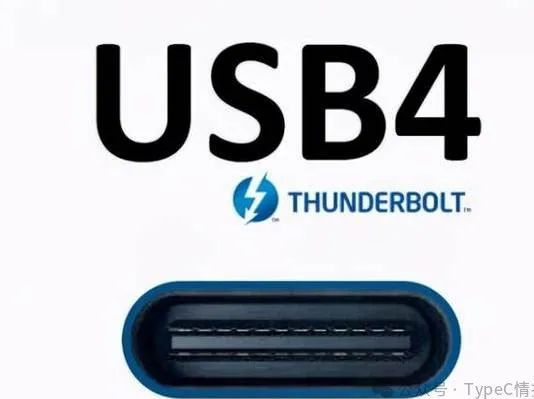
Many people are confused about the relationship between USB4 and Thunderbolt 4. In fact, both Thunderbolt 4 and USB4 are built based on the underlying protocol of Thunderbolt 3. They complement each other and are compatible. The interfaces are all Type-C, and the maximum speed is 40 Gbps for both.
First of all, the USB4 Cable we are referring to is the transmission standard of USB, which is a protocol specification related to the performance and efficiency of USB transmission. USB4 can be understood as the “fourth generation” of this specification.
The USB transmission protocol was jointly proposed and developed by multiple companies including Compaq, DEC, IBM, Intel, Microsoft, NEC, and Nortel in 1994. It was released as USB V0.7 version on November 11, 1994. Later, these companies established a non-profit organization to promote and support USB in 1995, named USB Implementers Forum, which is the familiar USB-IF, and USB-IF is now the USB standardization organization.
In 1996, USB-IF officially proposed the USB1.0 specification. However, the transmission rate of USB1.0 was only 1.5 Mbps, the maximum output current was 5V/500mA, and at that time, there were very few peripheral devices that supported USB, so motherboard manufacturers rarely directly designed USB interfaces on the motherboard.
▲USB 1.0
In September 1998, USB-IF released the USB 1.1 specification. The transmission rate was increased to 12 Mbps this time, and some technical details in USB 1.0 were corrected. The maximum output current remained 5V/500mA.
In April 2000, the USB 2.0 standard was introduced, with a transmission rate of 480 Mbps, which is 60MB/s. It is 40 times that of USB 1.1. The maximum output current is 5V/500mA, and it adopts a 4-pin design. USB 2.0 is still in use to this day and can be said to be the longest-lasting USB standard.
Starting from USB 2.0, USB-IF demonstrated their “unique talent” in renaming.
In June 2003, USB-IF renamed the specifications and standards of USB, changing USB 1.0 to USB 2.0 Low-Speed version, USB 1.1 to USB 2.0 Full-Speed version, and USB 2.0 to USB 2.0 High-Speed version.
However, this change had little impact on the present situation at that time, because USB 1.0 and 1.1 have basically left the historical stage.
In November 2008, the USB 3.0 Promoter Group, consisting of industry giants such as Intel, Microsoft, HP, Texas Instruments, NEC, and ST-NXP, completed the USB 3.0 standard and publicly released it. The official name given was “SuperSpeed”. The USB Promoter Group is mainly responsible for the development and formulation of USB series standards, and the standards will eventually be handed over to USB-IF for management.
The maximum transmission rate of USB 3.0 reaches 5.0 Gbps, which is 640MB/s. The maximum output current is 5V/900mA. It is fully compatible with 2.0 and supports full-duplex data transmission (i.e., it can receive and send data simultaneously, while USB 2.0 is half-duplex), as well as having better power management capabilities and other features.
USB 3.0 adopts a 9-pin design. The first 4 pins are the same as those of USB 2.0, while the remaining 5 pins are specially designed for USB 3.0. Therefore, you can determine whether it is USB 2.0 or USB 3.0 by the pins.
In July 2013, USB 3.1 was released, with a transmission speed of 10 Gbps (1280 MB/s), claiming to be SuperSpeed+, and the maximum allowable power supply voltage was raised to 20V/5A, which is 100W.
The upgrade of USB 3.1 compared to USB 3.0 was also very obvious. However, not long after, USB-IF renamed USB 3.0 as USB 3.1 Gen1, and USB 3.1 as USB 3.1 Gen2.
This name change caused trouble for consumers because many unscrupulous merchants only marked products as supporting USB 3.1 in the packaging without indicating whether it was Gen1 or Gen2. In fact, the transmission performance of the two is quite different, and consumers might accidentally fall into a trap. Therefore, this name change was a bad move for the majority of consumers.
In September 2017, USB 3.2 was released. Under USB Type-C, it supports dual 10 Gbps channels for data transmission, with a speed of up to 20 Gb/s (2500 MB/s), and the maximum output current is still 20V/5A. Other aspects have minor improvements.
▲The process of USB name changes
However, in 2019, USB-IF came up with another name change. They renamed USB 3.1 Gen1 (which was the original USB 3.0) as USB 3.2 Gen1, USB 3.1 Gen2 (which was the original USB 3.1) as USB 3.2 Gen2, and USB 3.2 as USB 3.2 Gen 2×2.
Now and Future: The Leap Forward of USB4
Now that we have reached USB4, let’s take a look at the upgrades and improvements of this new protocol standard. First and foremost, since it’s a cross-generation upgrade from “3″ to “4″, the improvement must be significant.
Based on all the information we have gathered, the new features of USB4 are summarized as follows:
1. Maximum transmission speed of 40 Gbps:
Through dual-channel transmission, the theoretical maximum transmission speed of USB4 should be able to reach 40 Gbps, which is the same as that of Thunderbolt 3 (referred to as “Thunderbolt 3″ below).
In fact, USB4 will have three transmission speeds: 10 Gbps, 20 Gbps, and 40 Gbps. So if you want to buy a device with the highest transmission speed, that is, 40 Gbps, you’d better check the specifications before purchasing.
2. Compatible with Thunderbolt 3 interfaces:
Some (not all) USB4 devices can also be compatible with Thunderbolt 3 interfaces. That is to say, if your device has a USB4 interface, it may also be possible to connect a Thunderbolt 3 device externally. However, this is not mandatory. Whether it is compatible or not depends on the attitude of the device manufacturer.
3. Dynamic bandwidth resource allocation capability:
If you use the USB4 port while also using it to connect a display and transfer data, the port will allocate the corresponding bandwidth according to the situation. For example, if the video only requires 20% of the bandwidth to drive a 1080p display, then the remaining 80% of the bandwidth can be used for other tasks. This was not possible in USB 3.2 and previous eras. Before that, the USB’s working mode was to take turns.
4. USB4 devices will all support USB PD
USB PD is USB Power Delivery (USB power transmission), which is one of the current mainstream fast charging protocols. It was also formulated by the USB-IF organization. This specification can achieve higher voltages and currents, with the maximum power transmission reaching up to 100W, and the power transmission direction can be freely changed.
According to the regulations of USB-IF, the standard form of the current USB PD charging interface should be USB Type-C. In the USB Type-C interface, there are two pins, CC1 and CC2, which are used for PD communication configuration channels.
5. Only USB Type-C interface can be used
With the above feature, it is natural that we can also know that USB4 can only operate through USB Type-C connectors. In fact, not only USB PD, but also in other latest standards of USB-IF, it is only applicable to Type-C.
6. Can be backward compatible with past protocols
USB4 can be used together with USB 3 and USB 2 devices and ports. That is to say, it can backwardly be compatible with previous protocol standards. However, USB 1.0 and 1.1 are not supported. Currently, the interfaces using this protocol have almost disappeared from the market.
Of course, when connecting a USB4 device to a USB 3.2 port, it cannot transmit at a speed of 40 Gbps. And the old-fashioned USB 2 interface will not become faster just because it is connected to a USB4 interface.
Post time: Jul-21-2025


