
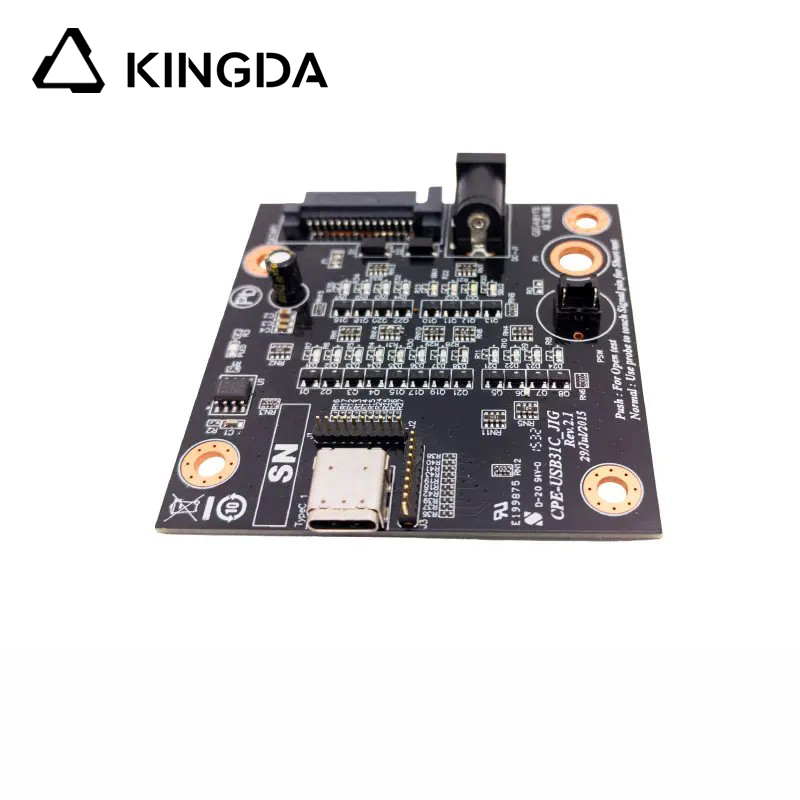
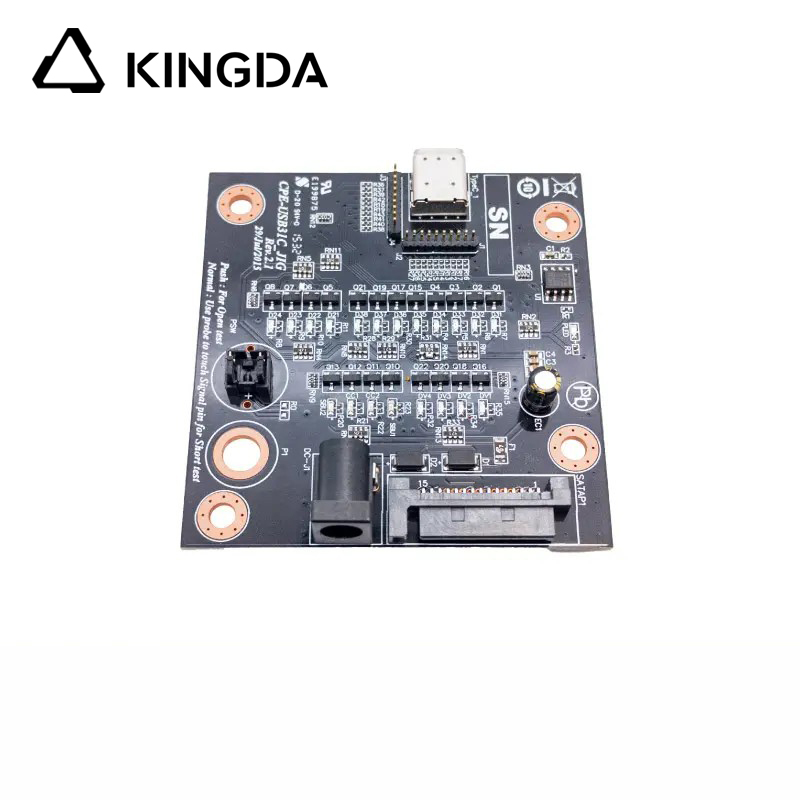
USB3.1 Type-C main board motherboard test fixture test module-JD-MC01


Applications:
Features:
A USB3.1 Type-C Mode redriving switch test module supporting data rates up to 10 Gbps for a downstream facing port (Host).it can be used for testing the function of a PCBA with type c facing port.
Wide Compatibility:
Typical applications include Computer, storage racks, etc.,
Product Detail Specifications
Physical Characteristics
Cable Length
Color Black
Connector Style Straight
Product Weight
Wire Diameter
Packaging Information Package
Quantity 1Shipping (Package)
Weight
Product Detail Specifications
Connector(s)
Connector A TYPE C CONN
Connector B PCB
USB3.1 Type-C Mode redriving switch tester
Specifications
| Electrical | |
| Quality Control system | Operation according to regulation & rules in ISO9001 |
| Insulation Resistance | |
| Contact Resistance | |
| Working Temperature | -25C—80C |
| Data transfer rate |
What are the features of the SAS cables and the SAS cables
SAS cable is the storage field of the disk media is the most critical device, all data and information should be stored on the disk media. The read speed of the data is determined by the connection interface of the disk media. In the past, we have always stored our data through SCSI or SATA interfaces and hard drives. It is because of the rapid development of SATA technology and various advantages that more people will consider whether there is a way to combine both SATA and SCSI, so that the advantages of both can be played at the same time. In this case, the SAS has emerged. Networked storage devices can be roughly divided into three major categories, namely, high-end middle-end and near-end (Near-Line). High-end storage devices are mainly Fibre channel. Due to the fast transmission speed of Fibre channel, most high-end storage optical fiber devices are applied to the large-capacity real-time storage of task-level key data. The mid-range storage device is mainly SCSI devices, and it also has a long history, being used in the mass storage of commercial-level critical data. Abbreviated as (SATA), it is applied to mass storage of non-critical data and is intended to replace previous data backup using tape. The best advantage of Fibre Channel storage devices is fast transmission, but it has a high price and is relatively difficult to maintain; SCSI devices have relatively fast access and medium price, but it is slightly less extended, each SCSI interface card connects up to 15 (single channel) or 30 (dual-channel) devices. SATA is a rapidly developing technology in recent years. Its biggest advantage is that it is cheap, and the speed is not much slower than the SCSI interface. With the development of technology, SATA’s data reading speed is approaching and surpassing the SCSI interface. In addition, as SATA’s hard disk is getting cheaper and more expensive, it can gradually be used for data backup. So the traditional enterprise storage because considering the performance and stability, with SCSI hard disk and fiber optic channel as the main storage platform, SATA is mostly used for non-critical data or desktop personal computer, but with the rise of SATA technology and SATA equipment mature, this mode is being changed, more and more people began to pay attention to SATA this serial data storage connection way.


