
Universal Serial Bus (USB) is arguably one of the most versatile interfaces in the world. Originally initiated by Intel and Microsoft, it features hot-swappable, plug-and-play functionality. Since its introduction in 1994, after 26 years of development—evolving from USB 1.0/1.1, USB 2.0, and USB 3.x to today’s USB4—transmission rates have surged from 1.5 Mbps to the latest 40 Gbps. Today, not only newly launched smartphones but also laptops, digital cameras, smart speakers, power banks, and even automotive devices are adopting the Type-C specification. Tesla’s new Model 3 has replaced USB-A with USB-C ports, and Apple has fully transitioned its MacBooks and AirPods Pro to USB Type-C for both data and charging. Furthermore, in line with EU requirements, Apple is expected to adopt USB Type-C for the future iPhone 15, making USB4 the undeniable mainstream interface for the future market.

Requirements for USB4 Cables
The biggest leap in USB4 is the integration of Intel’s Thunderbolt protocol specification, shared with USB-IF. Operating over dual lanes, bandwidth doubles to 40 Gbps, and Tunneling supports multiple data and display protocols, including PCI Express and DisplayPort. USB4 also maintains robust backward compatibility with USB 3.2/3.1/3.0/2.0 and Thunderbolt 3. As a result, USB4 has become the most complex USB standard to date, demanding that designers master not only USB4, USB 3.2, USB 2.0, USB Type-C, and USB Power Delivery specifications, but also PCI Express, DisplayPort, and HDCP for DisplayPort mode. This complexity inevitably places stricter electrical performance requirements on cables and connectors. A critical point here involves USB C male vs female—the male plug (cable end) and female receptacle (device/host port) must meet precise impedance and loss budgets. Any mismatch, especially in extension scenarios, can degrade the high-frequency signal integrity that USB4 relies on.
The Coaxial USB4 Emerges
In the USB 3.1 10 Gbps era, many manufacturers adopted coaxial structures to meet high-frequency demands. Coaxial cables were not widely used in USB before; their applications were mainly in notebooks, mobile phones, GPS, measuring instruments, and Bluetooth technology, often described as medical coaxial, Teflon coaxial, or RF coaxial cables. With market pressure for cost control, stranded-pair designs quickly dominated the USB 3.1 market. However, as USB4 imposes more rigorous high-frequency transmission requirements—demanding strong anti-interference capability and stable electrical performance—coaxial has become the current mainstream solution for USB4. Coaxial production is a complex process requiring specialized equipment and mature process control, from material selection to electrical parameter testing. While the coaxial structure performs excellently, its high material and processing costs remain a bottleneck. Market development, however, always gravitates toward cost-effective mass production, so the twisted-pair version has continued to be researched for breakthroughs.
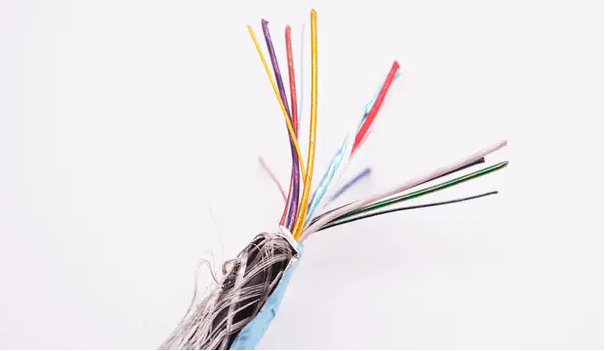
As seen in its structure—from inner to outer: central conductor, insulating layer, outer conductive layer (metal braid), and jacket—coaxial cable uses a semi-foaming polypropylene insulation layer that determines transmission characteristics. The shielding net serves as both a signal return path and an EMI suppressor. "Expensive" has its reasons.
Is a USB4 Twisted-Pair Version Coming?
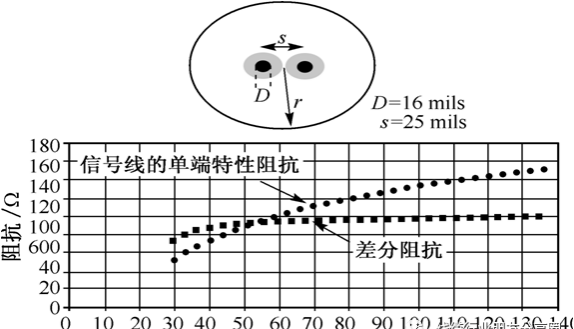
As circuits operate at higher frequencies, electrical characteristics become harder to control. When component or circuit dimensions exceed one wavelength of the operating frequency, parasitic effects and material properties dominate. Traditional twisted-pair structures often fail to meet customer high-frequency parameters. While the coaxial version offers excellent performance, its cost and diameter limit widespread adoption. Why can’t twisted-pair be used in bulk for USB4? In general, higher frequencies require smaller twist pitches for better balance, but excessively small pitches reduce production efficiency and cause insulation core wire sprains, leading to electromagnetic field distortion and degraded SRL and attenuation. Additionally, insulation eccentricity causes periodic impedance fluctuations that affect return loss at high frequencies—making mass adoption of twisted-pair USB4 difficult.
A New Approach: Differentially Wrapped Pairs
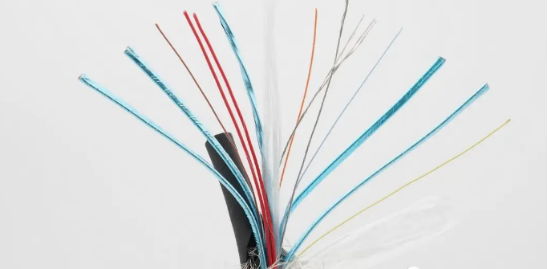
Rather than abandoning coax entirely, engineers have begun validating differentially wrapped shielding methods for USB4. Unlike twisted pairs, which easily sprain conductors, parallel wrapping avoids this issue. This approach is already used in high-speed lines like SAS and SFP+, proving its performance potential. The aluminum foil layer in differential pairs provides shielding against external interference, using one-sided or two-sided coated plastic film as a cable shield. The wrapping process gathers two insulated core wires and a ground wire, applying aluminum foil and self-adhesive polyester tape to stabilize the structure. This process critically impacts impedance, delay skew, and attenuation—so strict process control and electrical testing are essential.
It is important to note that, regardless of the shielding method, USB-IF USB Type-C extension cable not compliant with the official specification. The USB Type-C standard explicitly defines that a compliant cable must have a plug on one end and a plug on the other (or a captive device), not a receptacle for extending an existing cable. This rule exists because adding an extension alters the electrical length and impedance profile, potentially violating the stringent loss and reflection budgets for high-speed USB4 signaling. In other words, USB Type-C specification extension cable not allowed—designers must account for this when building system interconnects, as any extension would make the assembly non-compliant and likely fail certification.
Of course, not all data lines have two shielding layers; some have multiple, some only one, and some none. Shielding is essentially a metallic barrier that controls electromagnetic induction and radiation between two regions. When done correctly, the shielded differential pair in USB4 can achieve high-frequency signal testing results comparable to coaxial cables. With these innovations, a cost-effective, high-performance differentially wrapped USB4 cable may soon become a reality—bridging the gap between stringent specs and market affordability.
Post time: Aug-16-2022


