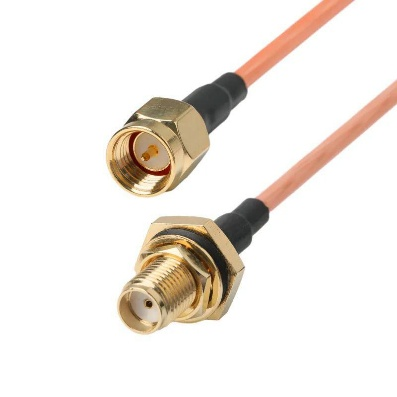
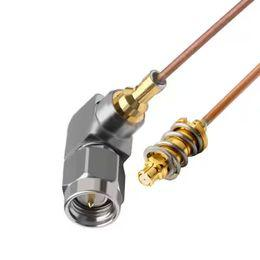
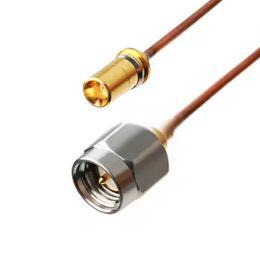
Modern wireless equipment, test‑measurement instruments, automotive systems and medical hardware all rely on stable high‑frequency signal links. Poor cabling will bring signal attenuation, reflection, crosstalk and electromagnetic interference, directly hurting product performance. RF (Radio‑Frequency) coaxial cable is purpose‑built to solve these high‑frequency interconnection challenges.
RF Cable is a specialized coaxial cable designed for radio‑frequency high‑frequency signal transmission. It delivers low signal loss, high‑grade shielding and consistent impedance control. It effectively minimizes signal attenuation, reflection, crosstalk and external EMI/RFI interference, satisfying strict high‑speed, high‑frequency and high‑reliability connection requirements for modern electronics.
RF cables are widely deployed across wireless communication equipment, network hardware, test & measurement instruments, automotive electronics, medical devices, industrial control hardware and consumer electronics.
JD‑Cables delivers end‑to‑end solutions: from bare single RF coaxial wire to fully terminated RF cable assemblies. Our engineering team designs products matched to your target frequency, impedance, wire gauge, length, connector types and real‑world operating environment.
Internal Structure of RF Coaxial Cable
Standard RF cable follows classic coaxial architecture from inside out:
Center Conductor → Dielectric Insulation → Shield Layer → Outer Jacket
- Center Conductor: Carries RF signals. Material options include bare copper, tinned copper, silver‑plated copper and copper alloy. Selection is based on conductivity, bending‑flex life, cost and high‑frequency performance requirements.
- Dielectric Insulation: Maintains consistent spacing between inner conductor and shield layer, stabilizing characteristic impedance.
- Shield Layer: Suppresses external electromagnetic noise and reduces inter‑signal crosstalk. Multi‑layer shielding is available for high‑noise environments.
- Outer Jacket: Offers mechanical protection, wear‑resistance and environmental protection against moisture, temperature and abrasion.
Key Benefits of RF Cables
1. Outstanding High‑Frequency Performance
RF cables are optimized for radio‑frequency signal transmission. By tuning conductor, dielectric and shielding construction, they maintain stable electrical performance across different frequency bands. Custom‑tuned cable designs are available to match your exact application frequency range.
2. Low Insertion Loss
Optimized coaxial geometry reduces signal attenuation during transmission. It preserves clean signal quality even for long cable runs or high‑frequency working conditions.
3. Stable Characteristic Impedance (50Ω & 75Ω)
Precise manufacturing controls cable geometry to lock‑in target impedance. Two most common specifications are 50Ω and 75Ω.
- 50Ω RF Cable: Dominant for wireless communication, RF modules, test‑and‑measurement equipment.
- 75Ω RF Cable: Mainly used for video, broadcasting and certain communication systems.
Important note: Impedance mismatch will trigger signal reflection and performance degradation. Always match cable impedance to your whole system.
4. Superior EMI / RFI Shielding
Different shielding structures suppress EMI and RFI noise, lowering crosstalk between adjacent signal lines. For high‑density, high‑frequency hardware, double‑layer or multi‑layer shielding can be adopted for stronger anti‑interference capability.
5. Compact Small‑Diameter Options
Ultra‑thin coaxial constructions keep good high‑frequency performance while shrinking outer diameter. Perfect for electronic devices with constrained internal installation space.
6. Excellent Mechanical Flexibility
Flexible conductor alloys, special dielectric materials and bend‑tolerant shielding structures can be specified. The finished RF cable withstands repeated bending and complex routing paths inside equipment.
7. Versatile Complete RF Cable Assemblies
RF cable can be pre‑terminated with various RF connectors into a one‑piece cable assembly, ensuring reliable physical contact and stable high‑frequency performance out‑of‑the‑box.
Typical Application Fields
- Wireless communication & network devices
- Test and measurement instruments
- Automotive electronics (vehicle antenna, ADAS modules, infotainment)
- Medical diagnostic equipment
- Industrial control systems
- Consumer electronics & IoT wireless modules
Common RF Connector Types
We support termination with mainstream RF series connectors:
SMA, SMB, SMC, MMCX, MCX, BNC, TNC, U.FL, I‑PEX / MHF series, N‑Type, plus custom special RF connectors.
Custom RF Cable Assembly Solutions
JD‑Cables provides full‑turnkey RF cable services covering the whole workflow:
Cable Design → Material Selection → Connector Matching → Cable Assembly → Electrical Performance Testing
We customize parameters including target frequency, characteristic impedance, cable outer diameter, finished length, conductor material, shielding layers, jacket material and connector configuration.
From prototype sample validation through mass‑volume production, we deliver production‑ready RF cable assemblies for your project.
FAQ for RF Cables
Q1: Should I pick 50‑ohm or 75‑ohm RF cable for my project?
A1: Select impedance to match your device circuit requirements. Use 50Ω for wireless communication, RF modules and test instruments. Choose 75Ω for video, broadcast and CATV‑related applications. Impedance mismatch causes signal reflection and poor performance.
Q2: What information do I need to prepare for RF cable RFQ?
A2: Provide working frequency, target impedance, cable length, required connector part‑numbers both ends, minimum bend radius, operating temperature, shielding requirements and order volume. Supplying mechanical drawings will speed‑up quotation greatly.
Q3: Can you supply multi‑layer shielding RF assemblies for high‑EMI noisy environments?
A3: Yes. We can implement double‑shield or multi‑shield constructions to enhance noise suppression for industrial, test‑measurement and medical applications.
Get Your Custom RF Cable Solution
If you are developing wireless, test‑measurement, automotive or medical devices and need reliable custom RF cable assemblies, reach out to our engineering team for technical consultation.
Contact us to discuss your RF cable project requirements.
Post time:
Oct-02-2026
Previous:
Why Choose Micro‑Coaxial Cable for High‑Density High‑Speed Electronic Designs
Next: